



‘You can just read books for enjoyment and that’s what this is’ – meet the founder of the UK’s first Romantasy bookshop
Posted on September 28, 2026 in INSIDE, Oxford
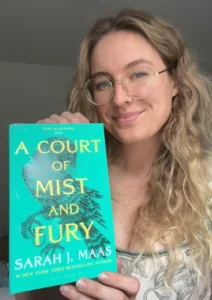
Starlin Marot is the founder of Bad Girl Books, the UK’s first Romantasy bookshop.
Here at the Oxford branch of the SYP, we’re very lucky to be local to such a trailblazing shop. Since officially opening Bad Girl Books in July 2026, Starlin has grown to be a friendly face in the Jericho community, and has welcomed many of our young publishers to the shop.
After a busy summer of pop-ups and author events to launch the bookshop, Starlin was able to sit down with the SYP and talk to our Blog Officer Lucy Riddell all about Bad Girl Books and Romantasy. Read the full interview below.
LR: We’re here today to talk about two main topics: your experience as the founder of the UK’s first Romantasy bookshop, and more generally about Romantasy as a genre. To kick it off, I think we need to define what Romantasy is to you. Why is that combination of romance and fantasy so fascinating to readers?
SM: Romantasy is the blend of the romance and fantasy book genres. I think it’s relevant right now because there’s a lot happening in the world. A lot of times women especially don’t feel like it’s a very positive place. Romantasy is becoming popular now because it helps so many people escape their day to day lives and the reality of the world we live in.
It’s such a nice, empowering world to be in, when you’re in Romantasy. It’s these women-focused stories written by women. They’re saving the world and coming into their powers; they’re gaining confidence. There’s a lot of humanity intertwined into these magical worlds.
LR: Yes, Romantasy can be very empowering, especially to female readers. Why do you think such a female-centred genre has become more popular in recent years?
SM: I think fantasy as a genre, like most industries, has been very male-dominated. We have a lot of male authors and male-led adaptations. Things like Game of Thrones and The Lord of the Rings, and all these books that are focused on male stories and their perspectives. Women have tried to get into that industry but they weren’t mainstream until recently. I think it’s about time that there’s an even playing field, with a lot of women creating amazing things and people listening.
“I think it’s about time that there’s an even playing field.”
And it’s not just women who read these stories. I have a really diverse customer base. Although there’s stigma with the genre – I think because it is very women-focused – there’s a lot of people who are enjoying it no matter what gender they are. In the same way women enjoy The Lord of the Rings even though it’s written by a man, anyone could enjoy Romantasy.
LR: It’s good to know that there is such a diverse community out there. That said, there is still in the mainstream media somewhat of a negative reputation for Romantasy. There’s a long way to go before we can fully get rid of the stereotypes attached to it, for example that it’s a ‘women’s only’ genre. Do you have any goals that you want to see met, and maybe things that need to be done more widely for us to reach them?
SM: With Romantasy becoming more mainstream you’re always going to have people who are judgemental about it. A lot of people dismiss it and assume that it’s one thing when it’s not. I think over time this will diminish.
I sell a lot of products that say ‘Read smut!’ – I don’t think it’s shameful to read anything within this genre, no matter how explicit it is. The more people talk about it and the more people connect with others who are enjoying the same thing, there will be less of a stigma. The more mainstream it becomes, the better, honestly. We’re seeing adaptations for Fourth Wing and other Romantasy books, and that will grow the genre even more – it’s already huge! So, I think it’ll just come with time, and the more people who are open and embracing it without embarrassment, the better.
That’s why I made Bad Girl Books, because I wanted a space that embraced Romantasy without shame. You can just read books for enjoyment and that’s what this is. It’s entertainment, at the end of the day. A lot of people who criticise the genre compare it to classical literature, and it’s just not the same category. That’s like comparing a James Bond movie to a documentary. The more people that are open-minded and talk about it with others, it’ll reduce the stigma over time.
“You can just read books for enjoyment and that’s what this is.”
LR: Yes, I think that’ll definitely happen. Even the novel form itself used to be ‘just for women,’ and that changed.
After discussing your reasons to found Bad Girl Books, I think this is a good moment for us to segue into the real side of that process. This was something new to you – what was the process like?
SM: It was quite a lot! I was planning to do it, actually, just as a hobby. I was going to be working full-time again. Basically, I left a job last summer that was really toxic quite suddenly, and I wasn’t sure what I was going to do. I was applying to jobs and I was spending more time improving my mental health. I was reading a lot to help me, and I was spending a lot of time with the community on Instagram and TikTok.
But I felt like I didn’t have a physical space where I could go to make new friends and talk about the books I was reading. I had an idea to open a bookshop. I’ve always wanted to open a gift shop and so my dream combined into a gift shop/bookshop, with a Romantasy theme. While I had the time I thought, ‘I’ll plan a quick pop-up event and see how many people come; see if it might be a viable business.’ I posted a TikTok video – literally one TikTok video! – and it got 50 thousand views, and a thousand people booked to come in two days. I had to shut off the tickets and max out my credit cards to get all these books and products in stock to make a one-weekend bookshop. I set up the entire bookshop, built all the bookshelves, brought them with me, ran it for two days, and then broke everything down again.
It was very successful. I ended up not pursuing any of the full-time job roles that I had been applying for, and decided, ‘I’m going to do this full time and try and build it really quickly – and open the bookshop.’ I started in September last year; that was my first pop-up. I did four more pop-ups back to back, with my last one being up in Manchester in February for Valentine’s Day. That was a three-day event, and 3000 people came. It was insane! I had the best time and I got feedback to improve and get more products that people wanted to see. I was able to learn really quickly, as well. Because I sold so much in such a short amount of time, I could see in real time which products were selling the fastest and which were selling the slowest, which really helped me when I was building up which products I was going to stock in my permanent shop.
It was an incredible opportunity for me – and really full on as well. But I come from a background of working in start-ups and small businesses, so I have no problem working non-stop. After the first pop-up, I wouldn’t have been able to do it without all my volunteers that I met through the community. So, a girl messaged me saying she wanted to help. She thought the first pop-up was really good, and if I needed help unboxing books she would be happy to help me. I was like, ‘Oh, I’ll ask if anyone else wants to as well, because I’d actually love some help.’ I sent out a newsletter and 50 people responded. So I set up a WhatsApp group for us – it was called London Volunteers – and they would come and help me set up for the whole week before, setting up the bookshelves, the books, the products, pricing everything and stickering everything, setting up the tills, and getting everything ready in the stockroom.
“I come from a background of working in start-ups and small businesses, so I have no problem working non-stop.”
I had over a thousand products that I was stocking at these pop-ups, which is insane. I would store everything at my house, bring it all to the pop-up, sell most of it, and then bring whatever was left back to my house. That was a very full on part of the business venture. After my fourth pop-up, I was able to raise the £30,000 that I needed to open this place. Just to rent it I needed a £20,000 deposit, so I raised that money and also money to do the renovation, because everything was grey and I needed to do a lot of work to the property.
LR: It needs to be pink!
SM: Yeah! Outside and inside – everywhere! It’s been a non-stop crazy summer. I can’t believe how many people have come to the shop and how much press the business has gotten. It’s been so amazing and wonderful. I’m just so happy.
LR: That’s amazing! You should be really proud of what you’ve managed to achieve in such a busy time. And also a time of many heatwaves.
SM: Yes, the heatwaves were awful. I was so close to buying an air conditioner but we didn’t have any space. To get one fixed in the ceiling was going to cost £12,000, and I just didn’t have the money for that. We ended up having six fans, and we were all dying. The renovation was all during the heatwave. We were painting everywhere. It was crazy – all the volunteers showing up in 35 degrees, and we’re all in our dungarees painting the shop.
LR: That shows just how dedicated everyone was to getting it off the ground, which is lovely to see.
That sounds like a really full on experience for you, and I’m sure there’s still lots to do. But you’re now pretty well grounded in the Oxford book community, and you’re also doing collaborations with local businesses. Most recently, you’ve announced your collaboration with Love Jericho, the cocktail bar next door. How did that come to light?
SM: Honestly, I love this neighbourhood. I know the other owners of all the shops around here. Love Jericho reached out to me on social media. They have a girl who does their social media, and she said, ‘Oh my god, I have an idea to do cocktails with the books.’ I was like, ‘Hell yeah, let’s do it!’ I told her the top three books that I think would work well with cocktails: ACOTAR, obviously, Fourth Wing, and Kiss of the Basilisk, which is a super popular book – and it’s really spicy, which I thought would be funny for a spicy cocktail.
A lot of the local businesses have collaborated with me, like the tattoo studio two doors down. They did a whole Romantasy art sheet for tattoos, and you get discounts on the tattoos if you’re a customer of Bad Girl Books! All the neighbours are so nice here, and it’s a very tight-knit community. I feel so happy to be on this street with these other small businesses.
“All the neighbours are so nice here, and it’s a very tight-knit community.”
I was inviting businesses from all over who maybe couldn’t afford a physical space. I had a local baker come in and do themed cupcakes and cookies, and then an artist, who set up her stall where she did doodles of people for £6 – it was the cutest thing ever. I had a local florist come and sell flowers. There was a discount for ‘a book and a bouquet.’ I’ve had lots of local businesses; I just invite them for free to come and sell their products outside my shop, because I have free use of the space, so I thought I’d just make the most of it.
LR: Everybody who’s come to these pop-ups and events, a large portion of those people will have found out about it on social media, which has definitely been important in growing your business. Would you say that social media has also had an impact on Romantasy?
SM: Yes, I think it’s changed the industry, to be honest. Not only is BookTok the reason I have a bookshop, but it’s absolutely changed the way publishing even works. It’s so cool to see as a reader, and also now that I work in the industry, seeing it from the publishing side. Publishing is notoriously quite slow-moving. You get a book deal, you go through the querying process, which can take months, and then when you get picked up it can take anywhere up to three years for the book to actually get out into the world.
But because Romantasy had such a boom and there were so many authors sharing stories within the space, an indie author could publish their book on their own, do all the covers, collaborate with artists – basically make their own book, where a publisher would have different teams to do it. Then they release it, promote it themselves, do all the marketing themselves, use social media to help get their book out there, and sometimes they can blow up their book through a viral video. A publisher might re-pick it up – that means they will pick up the book, it gets taken off all the channels that it was distributed on independently, and then they re-release it a few months later and use all of their publishing channels to get it world-wide, and in bookshops like Waterstones and all these big brands.
We’re seeing so much of that now. It happens all the time with indie books, and it’s so cool, because it means that readers are choosing what is being published, whereas before publishers would look at trends and they would decide what was being put out. But now, because it’s based on indie book popularity, it’s actually readers that can boost a book and get it published. It’s so interesting to see it change to where readers have a lot of control now over the kind of stories we want to see.
“Readers have a lot of control now over the kind of stories we want to see.”
LR: It’s nice that we’re seeing a community-led approach to publishing that we really haven’t experienced before. But what would you say makes a Romantasy book fresh and original? Tropes are important to Romantasy readers; they might look for ‘enemies to lovers’ or a certain setting. But can this sometimes lead to recycling of plots?
SM: It’s hard to say. I think that I actually never get sick of tropes. Almost all the books I read are ‘enemies to lovers,’ but they always feel unique to me, and I think you can tell when there’s been a lot of time put into setting and plot. Even if it’s a fairytale retelling – I have a section of my bookshop just dedicated to that – every one can make it their own. It’s cozy to read the same tropes again and again, but always in different, fresh ways. I think as readers we look forward to those parts of the book, and as long as it’s not the exact same copy of another story – which I have almost never come across, really – I think people can always be creative and fresh and come up with their own takes on things.
Starlin Marot, interviewed by Lucy Riddell


 Listen to the podcast
  Explore the Youtube channel